- The FCA reportedly cited the $6.3 billion Binance hack to support tighter rules on DeFi access, and Coinbase says the approach is “creating a prohibition”, according to the Financial Times.
- Binance is a centralized exchange, but stolen funds later moved through decentralized, cross-chain protocols, which blurs the line regulators and the industry draw.
- Coinbase’s “ban” description is not an official prohibition: genuinely decentralized protocols fall outside the regime, but regulated platforms may stop offering access if compliance becomes impractical.
- The FCA consultation (GC26/7) closed November 18. Final guidance is expected before the UK crypto regime starts on October 25, 2027.
The UK’s proposed DeFi rules are facing renewed criticism from Coinbase after the Financial Conduct Authority (FCA) reportedly cited the $6.3 billion Binance hack to support tighter restrictions on decentralized finance.
Britain is taking a tougher approach to DeFi regulation, with the FCA’s proposed requirements raising concerns over whether regulated crypto businesses can continue offering access to decentralized financial services.
The controversy exposes a difficult regulatory question. Binance is a centralized exchange, yet the consequences of its security failure could reach businesses offering access to decentralized financial services.
For an industry built partly around reducing dependence on financial intermediaries, that distinction matters.
Binance’s Security Failure Reaches the DeFi Debate
The October 29 Binance breach has already prompted questions in the British Parliament about consumer exposure and the cybersecurity standards applied to cryptocurrency businesses.
In a written parliamentary response on November 16, the British government confirmed that it was working with the FCA and other authorities to assess the incident’s implications for the UK.
The concern extends beyond the initial theft. Bitcoinist previously reported that wallets linked to the Binance hackers moved nearly $600 million in Ethereum through cross-chain protocols.
This complicates the industry’s argument that centralized exchange security and decentralized finance should be treated as entirely separate issues. Although the original breach occurred at Binance, the subsequent movement of stolen assets demonstrates how closely connected the two markets have become.
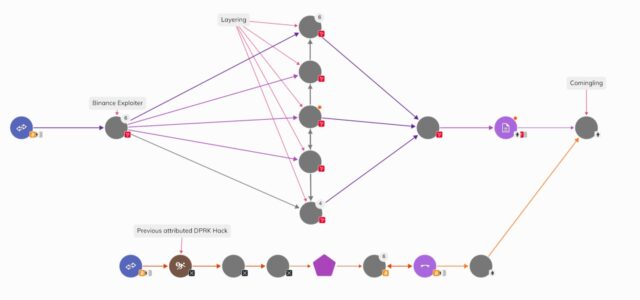
However, the use of decentralized protocols after a theft does not mean those protocols caused the original security failure. Preventing unauthorized access to an exchange’s assets and detecting the movement of stolen funds are different problems requiring different controls.
Coinbase Challenges the UK’s Regulatory Approach
Katie Harries, Coinbase’s head of European policy, described the UK’s approach in comments reported by the Financial Times as “creating a prohibition.”
Her objection concerns the ability of regulated cryptocurrency companies to provide customers with access to decentralized financial services under Britain’s forthcoming regulatory regime.
The FCA’s DeFi consultation, GC26/7, published on October 21, addresses how regulated businesses should manage cybersecurity, operational resilience and financial crime risks when interacting with decentralized protocols.
Consider a customer using a regulated cryptocurrency platform to access an on-chain lending market. The platform may control the customer relationship and the interface through which transactions are submitted, but it does not necessarily control the underlying lending protocol.
The regulatory challenge is determining which risks the platform can reasonably manage and which depend on software or governance arrangements outside its control.
Requirements designed for conventional financial institutions may be difficult to satisfy when a service depends on independently deployed smart contracts.
That is not an argument for exempting cryptocurrency businesses from responsibility. A company offering customers access to DeFi should still be accountable for the services it provides, the risks it discloses and the claims it makes about customer protection.
Is Britain Really Planning to Ban DeFi?
Coinbase’s description should not be confused with an official prohibition on decentralized finance.
The FCA has previously clarified that a genuinely decentralized protocol falls outside the regulatory regime when no identifiable person conducts regulated activities through it.
The harder question concerns the businesses connecting consumers to those protocols.
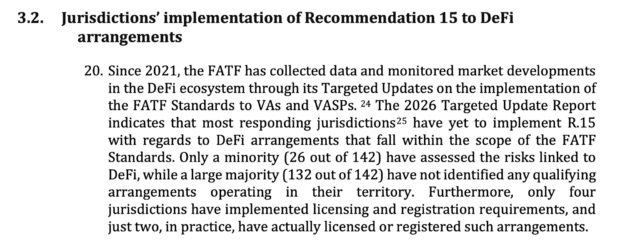
Britain is confronting a problem that remains unresolved internationally. A July 2026 FATF report found that only four of 142 surveyed jurisdictions had implemented licensing or registration requirements for qualifying DeFi arrangements, and just two had actually licensed or registered them.
If compliance requirements make such connections commercially or operationally impractical, regulated platforms may decide against offering them. That could restrict access through familiar cryptocurrency services without the government explicitly banning the underlying software.
There is also a potential consequence for consumer protection.
Removing access through regulated businesses would not necessarily eliminate demand for decentralized finance. Some customers might instead interact directly with protocols or seek services from overseas providers, where the protections available to them could be different.
That outcome is not inevitable. Direct protocol access introduces its own technical and financial risks, and regulators have legitimate reasons to examine how cryptocurrency companies expose customers to those risks.
The effectiveness of the proposed approach will depend on whether it addresses those risks without creating incentives for users to move outside supervised markets.
The FCA’s Next Decision Matters More Than the Consultation
The consultation period closed on November 18. Britain’s broader cryptocurrency regulatory framework is scheduled to take effect on October 25, 2027, with final DeFi guidance expected before then.
The remaining question is whether the FCA will establish a workable distinction between the responsibilities of regulated intermediaries and the characteristics of decentralized software.
Coinbase has a commercial interest in preserving access to decentralized financial services. The regulator, meanwhile, has a responsibility to protect customers and prevent financial crime. Neither position should escape scrutiny.
For cryptocurrency users, the final guidance will determine whether regulated platforms can continue developing services connected to decentralized protocols and under what conditions.
The Binance breach demonstrates the scale of the security risks facing cryptocurrency markets. Whether tighter restrictions on regulated DeFi access would have prevented comparable losses is a separate question that requires evidence.
from Bitcoinist.com https://ift.tt/jeTsEZG
Comments
Post a Comment