U.S. regulators are urging a court to stop Arizona from enforcing its gambling laws against crypto prediction‑market platform Kalshi.
Another Battle Over Crypto Prediction Markets
In a filing from yesterday, the Commodity Futures Trading Commission (CFTC) and the Justice Department (DOJ) commended a federal court to stop Arizona from using its gambling laws against crypto prediction‑market platform Kalshi.
The agencies are asking for a temporary restraining order and preliminary injunction to halt Arizona’s criminal case and gambling‑law enforcement.
Related Reading: Bitcoin Creator Exposed? New Investigation Points At The Real Identity Of Satoshi Nakamoto
CFTC argues that these contracts tied to sports, elections and other real‑world events qualify as swaps (financial derivatives) under U.S. law, rather than falling under state gambling statutes. The federal regulators based their arguments on the fact that since the contracts are settled on future events with economic impact, they are governed by the Commodity Exchange Act and fall under federal law rather than state authority.
Such interpretation curbs how far individual states can go in blocking or constraining these platforms, which regulators say would otherwise splinter the market into a patchwork of state‑by‑state rules.
The Arizona Lawsuit ExplainedArizona charged Kalshi with illegal gambling over sports and election markets. Arizona, along with an expanding list of other states, argue that contracts tied to sports results operate like ordinary bets and must be treated as gambling, subject to licensing rules, age limits, and consumer safeguards.
According to the court filing, Arizona first sent a cease‑and‑desist order to KalshiEx LLC and Kalshi Trading LLC in May 2025, alleging they were taking unlawful bets in breach of state law. The state then brought criminal charges against both entities for “betting and wagering” under several Arizona statutes, with an arraignment set for April 13.
On Monday, a Third Circuit (one of the 13 U.S. federal courts of appeals) ruling stated that sports event contracts on designated contract markets (DCMs) are “swaps” preempting state gambling laws. However, one judge disagreed, blasting Kalshi’s stance as a “performative sleight” designed to hide the fact that its offerings are, in substance, sports betting.
Crypto Prediction Markets Under A Coordinated State PushbackThis move follows a broader CFTC and DOJ litigation against Arizona, Connecticut, and Illinois over prediction‑market jurisdiction. Bitcoinist reported on it last week. This past month, a bipartisan Senate bill targeting sports‑style bets on platforms like Polymarket and Kalshi was introduced by Senators Adam Schiff (D-CA) and John Curtis (R-UT).
Also on March, democratic representative Seth Moulton of Massachusetts (MA-06) formally banned all his staff from participating in prediction markets. That same day, Congressman Adrian Smith (R-NE-03) and Congresswoman Nikki Budzinski (D-IL-13) from Nebraska introduced the PREDICT Act, banning members of Congress from trading on political and policy outcome markets.
Related Reading: SEC Admits Flaws In Crypto Enforment, What Went Wrong?
Kalshi’s main rival, Polymarket, is also under mounting legal fire, with a New York class action filed in February alleging it runs an unlicensed sports‑betting operation. Regulators in Nevada have launched a civil case against its parent company, and authorities in Ohio, Utah, and Iowa have likewise begun probing the platform.
Not too long ago, Argentinian authorities ordered a full national ban of Polymarket after it “predicted” inflation data back in February. On top of that, the platform faced terrible backlash recently after bettors sent death threats to Times of Israel military reporter Emanuel Fabian, following his report of an Iranian ballistic missile on March 10.
Both Kalshi and Polymarket updated their rules at the end of March to preemptively block politicians, candidates and sports insiders from trading on related markets
If the federal preemption is upheld, it will de‑risks U.S. prediction venues, potentially boosting liquidity and making them more attractive as macro and sports‑beta tools for crypto‑savvy traders. However, if states carve out sports and politics as gambling, markets may fragment offshore or into on‑chain, harder‑to‑police venues, raising operational and legal risk premia for anyone treating these contracts as serious hedging instruments.
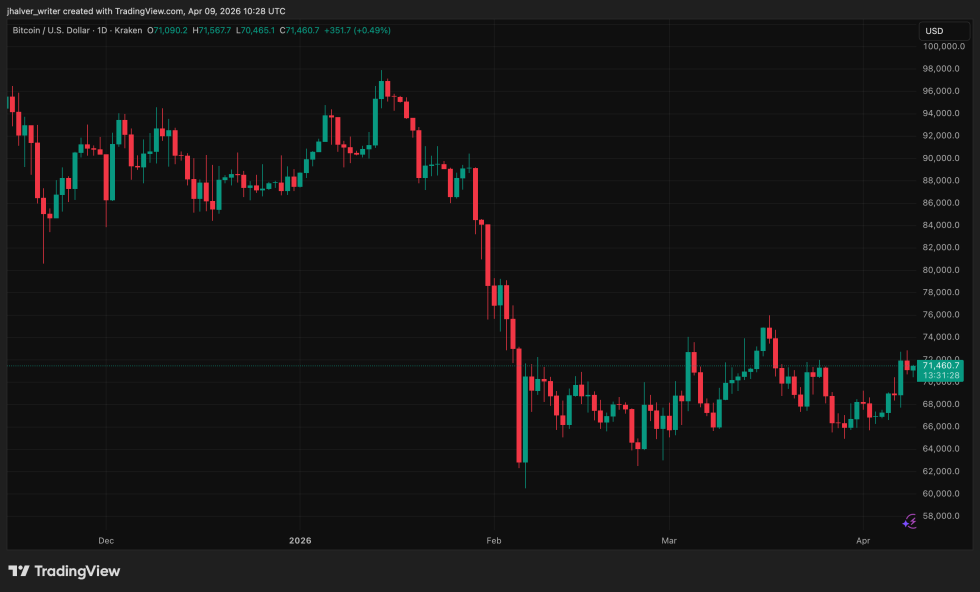
Cover image from Perplexity. BTCUSD chart from Tradingview.
from Bitcoinist.com https://ift.tt/YWPrx3C
Comments
Post a Comment