Crypto’s Slide May Not Be Fear — It’s A US Liquidity Crunch, CEO Says

A sharp hit to risk markets left crypto with heavy losses over the weekend. Reports say roughly $250 billion was wiped from combined market value as investors pulled back. Some of the selling hit Bitcoin hard. Others said it spread to tech stocks at the same time.

Bitcoin Faces A Confidence Test

Bitcoin has been searching for a base. As of today, it slipped below $80,000 and is down about 40% from the 2025 high above $126,000.

Traders and on-chain trackers show weaker buying pressure. Retail interest has cooled. Large outflows from spot ETFs have been recorded, and momentum has been lost across several indicators.

Support near $73,000–$75,000 is now the zone many are watching, while some market participants expect more stops to be run before calm returns.

Markets Are Moving Together

Analysts note that Software-as-a-Service stocks and Bitcoin fell in tandem. That matters because both depend a lot on hopes about future growth; they tend to be hurt first when money gets tight.

Gold was rising at the same time, and some traders argued that the move into bullion drew marginal cash away from riskier bets. When fewer dollars are freely moving between banks, hedge funds trim leverage fast and the riskiest positions suffer most.

Macro Liquidity, Not A Crypto-Only Issue

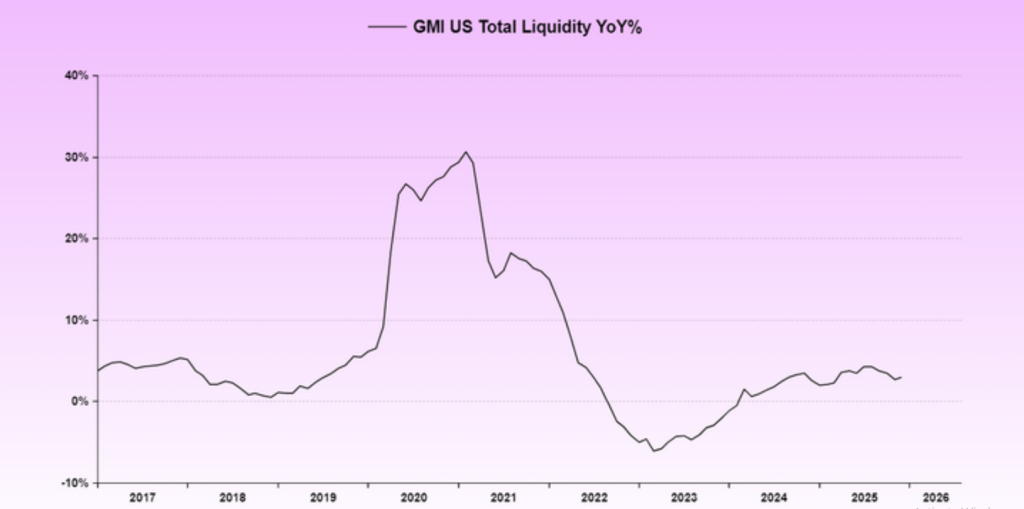
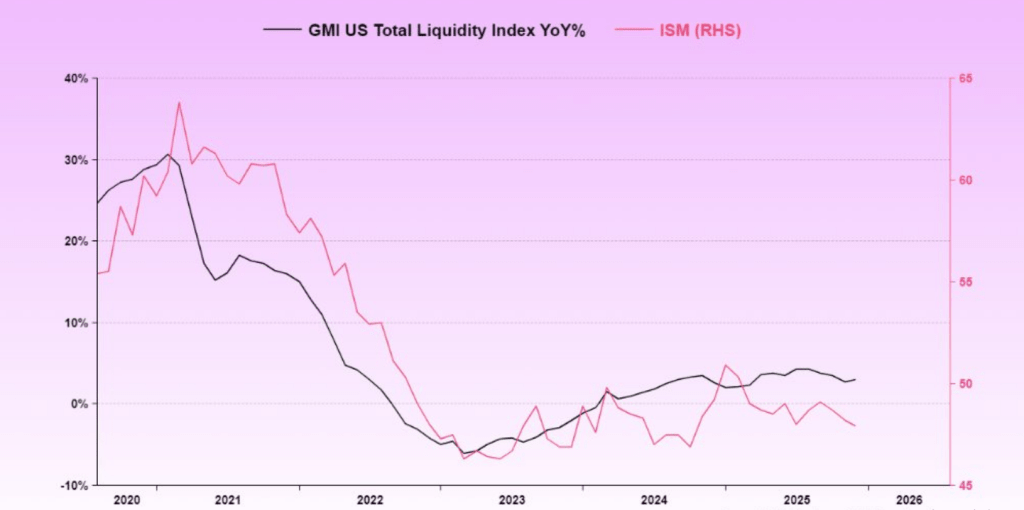
According to Raoul Pal, founder and CEO of Global Macro Investor. the squeeze came from a narrower pool of US dollar liquidity rather than a problem unique to crypto.

The mechanics he points to are technical: Treasury General Account rebuilds, higher funding costs, and a smaller buffer in the Reverse Repo Facility that used to soak up extra cash.

“The rally in gold sucked all marginal liquidity out of the system that would have flowed into BTC and SaaS,” Pal said. “There was not enough liquidity to support all these assets, so the riskiest got hit,” he added.

Those shifts can quietly remove liquidity even when no single headline screams crisis. Government funding hiccups were also blamed for adding friction to the system. When liquidity is chased away, assets tied to future cash flows get hit hard.
Different Voices On The Fed Nomination

Reports say the nomination of Kevin Warsh to run the Federal Reserve has added to the nervous mood. Some market pros worry he won’t cut rates as quickly as hoped.

Some analysts said that sentiment swung on the idea that rate relief might be delayed. But Raoul Pal pushed back, arguing that US President Donald Trump’s team will steer policy toward easier rates and that Warsh will follow that playbook.

Views differ. That uncertainty has left many traders unwilling to put fresh money into stretched trades.

A Cautious But Not Despairing Close

At the time of writing, price action looks fragile and rallies have been short-lived. Yet some analysts expect the liquidity drain to ease and for capital to trickle back once funding conditions normalize.

The coming weeks will show whether buyers return around the low-$70k area or if selling finds a deeper level. Reports note that risk appetite often returns before headlines change, but only when dollars are flowing again.

Featured image from Unsplash, chart from TradingView


from Bitcoinist.com https://ift.tt/VnRpSKE

Comments

Popular posts from this blog

Dogecoin Sees 47% Spike In Active Addresses, Why Price Could Follow Suit

Dogecoin has witnessed a massive spike in its active addresses , providing a bullish outlook for the foremost meme coin. Based on this development, the DOGE price could also witness a bullish reversal soon enough as it reclaims key support levels.  Dogecoin Records 47% Spike In Active Addresses In an X post , crypto analyst Ali Martinez stated that Dogecoin’s network activity is picking up. This came as he revealed that active addresses have jumped 47% in the past month, rising from 110,000 to 163,000. This development is bullish as it indicates more users are using the network.  This could help spark a significant rally in the Dogecoin price, as a surge in active addresses indicates that DOGE’s utility is on the rise. Another onchain metric which paints a bullish picture for the meme coin and hints at a reversal is the increase in new addresses. In another X post, Martinez revealed that Dogecoin’s new addresses have doubled in the past month, climbing from 16,400 to 34,6...

Bitcoin ETFs Post Second Straight Week Of $500 Million Outflow — Details

The US-based spot Bitcoin ETFs (exchange-traded funds) recorded their second consecutive week of significant outflows over the last five-day trading period. This recent run of disappointing performances reflects the ongoing shift in investor sentiment in the United States. Over the past year, strong inflows into the US Bitcoin ETF market have constantly been associated with positive action for the BTC price. Fittingly, the price of Bitcoin has been consolidating over the past few weeks, struggling to pick up any real momentum. Bitcoin ETFs Record Fourth Consecutive Outflow Day According to the latest market data , the US Bitcoin ETFs registered a total daily outflow of $62.77 million on Friday, February 21. This latest round of withdrawals marked the fourth straight day (and the eighth day in the last nine trading days) that the crypto-based products would witness a net capital outflow. The Grayscale Bitcoin Trust (with the ticker GBTC) accounted for a larger percentage of Friday’...

Bank of Russia Proposes Limited Crypto Trading for Select Investors

The Bank of Russia has put forward a new proposal that could mark a significant shift in the country’s approach to cryptocurrency regulation. Earlier today, the central bank announced that it has submitted a proposal to the Russian government to discuss allowing a limited group of investors to buy and sell cryptocurrencies such as Bitcoin. The proposal suggests implementing a three-year experimental regime where only qualified investors with at least $1.1 million in securities and deposits would be permitted to engage in crypto trading. This move is part of ongoing efforts to define Russia’s digital currency policies, which have historically shifted between strict regulations and cautious acceptance. Despite considering this controlled legalization for select investors, the Bank of Russia maintains its stance against using cryptocurrency as a payment method. The institution has also recommended introducing penalties for those who violate the terms of the experimental regime, rein...