
Bitcoin Hashpower Returns, Difficulty Sees Biggest Jump In Months

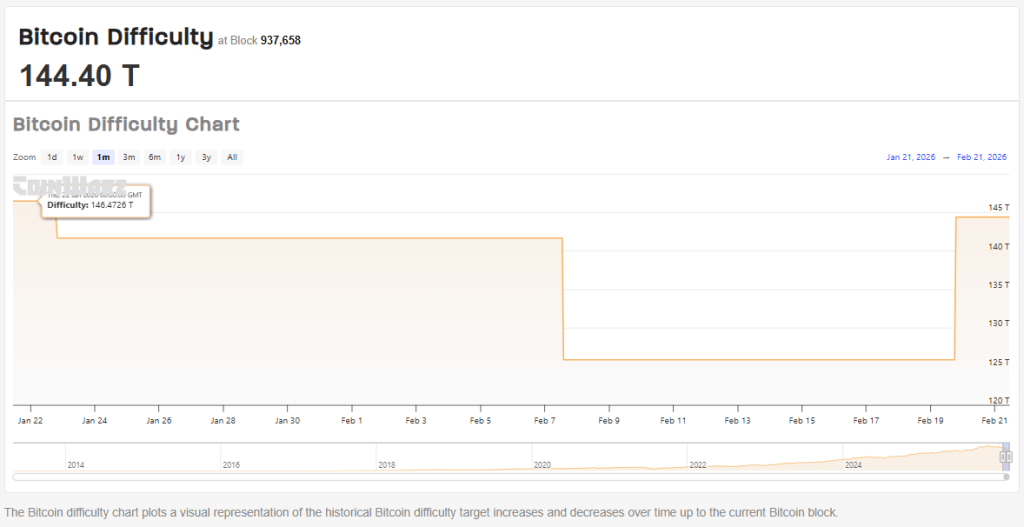
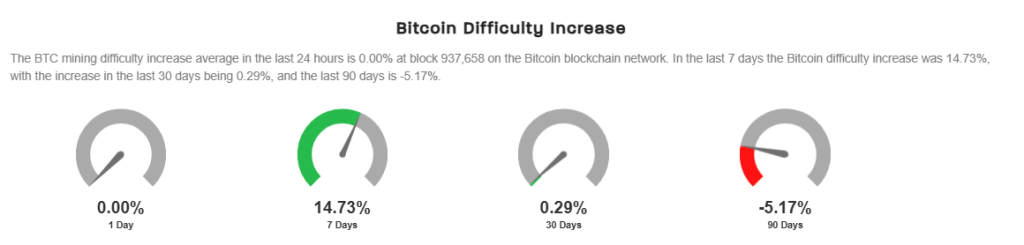
Bitcoin hashing power pushed the difficulty up about 15% to a little past 144 trillion on Friday, based on data from CoinWarz. That move reversed an earlier drop of 10% that followed widespread outages in parts of the US.

The numbers are blunt: machines went quiet during extreme weather, then came back online, and the protocol rebalanced itself.

Winter Outages And The Bounce Back

Foundry USA’s pool saw a dramatic swing in computing power, falling near 198 EH/s before climbing from roughly 400 EH/s. Reports say that many operators in affected regions shut down temporarily during the winter storms to protect equipment and help grids.

Some of the spaces that host miners coordinated with utilities. Power was conserved. Power was redirected.
Flexible Power Deals Changed The Game

Reports note that several miners did more than pause operations. LM Funding America reported curtailing machines and sending contracted power back to the grid, pocketing curtailment payments that helped offset lost mining time.

Canaan Inc. also said its US sites took part in demand response moves with local partners. These arrangements are part of why many facilities can afford to go offline when the grid needs relief, then restart when conditions improve.
What Higher Difficulty Means

Bitcoin’s difficulty is designed to reset every 2,016 blocks to hold average block times close to the 10-minute target. When more hash power returns, the algorithm raises difficulty. That makes the network harder to attack and raises the work needed to win a block reward.

For miners, higher difficulty reduces the Bitcoin earned per unit of compute, squeezing margins for outfits with older rigs or higher electricity bills.

Price Moves Stay Tied To Headlines

Bitcoin traded near $68,000 as markets reacted to rising geopolitical strain, especially between the US and Iran. Trading has felt cautious. Volume is lighter. Prices have bounced and then stalled on headline-driven flows, showing that investor mood still swings with global news.

At the same time, network metrics kept shifting under the surface — a reminder that technical and macro drivers can pull in different directions.

The US now supplies a big chunk of global hash power, according to Cambridge Centre for Alternative Finance. That means regional events, weather, and grid policies in the US matter a lot to global security and miner economics.

Some firms have begun to treat mining as a flexible load that can stabilize grids during stress, creating new income streams beyond pure block rewards.

Politics And Market Tone

Comments from politicians and geopolitical moves add friction. Mentions of US President Donald Trump in recent headlines have been tied to broader market nervousness; geopolitics can pull risk appetite downward and keep crypto prices range-bound.

The difficulty rebound itself didn’t spark a big price jump. Instead, it reinforced a simple truth: the protocol handled the shock, but miners felt the squeeze.

Featured image from Pexels, chart from TradingView


from Bitcoinist.com https://ift.tt/GpyZz8b

Comments

Popular posts from this blog

Dogecoin Sees 47% Spike In Active Addresses, Why Price Could Follow Suit

Dogecoin has witnessed a massive spike in its active addresses , providing a bullish outlook for the foremost meme coin. Based on this development, the DOGE price could also witness a bullish reversal soon enough as it reclaims key support levels.  Dogecoin Records 47% Spike In Active Addresses In an X post , crypto analyst Ali Martinez stated that Dogecoin’s network activity is picking up. This came as he revealed that active addresses have jumped 47% in the past month, rising from 110,000 to 163,000. This development is bullish as it indicates more users are using the network.  This could help spark a significant rally in the Dogecoin price, as a surge in active addresses indicates that DOGE’s utility is on the rise. Another onchain metric which paints a bullish picture for the meme coin and hints at a reversal is the increase in new addresses. In another X post, Martinez revealed that Dogecoin’s new addresses have doubled in the past month, climbing from 16,400 to 34,6...

Bitcoin ETFs Post Second Straight Week Of $500 Million Outflow — Details

The US-based spot Bitcoin ETFs (exchange-traded funds) recorded their second consecutive week of significant outflows over the last five-day trading period. This recent run of disappointing performances reflects the ongoing shift in investor sentiment in the United States. Over the past year, strong inflows into the US Bitcoin ETF market have constantly been associated with positive action for the BTC price. Fittingly, the price of Bitcoin has been consolidating over the past few weeks, struggling to pick up any real momentum. Bitcoin ETFs Record Fourth Consecutive Outflow Day According to the latest market data , the US Bitcoin ETFs registered a total daily outflow of $62.77 million on Friday, February 21. This latest round of withdrawals marked the fourth straight day (and the eighth day in the last nine trading days) that the crypto-based products would witness a net capital outflow. The Grayscale Bitcoin Trust (with the ticker GBTC) accounted for a larger percentage of Friday’...

Bank of Russia Proposes Limited Crypto Trading for Select Investors

The Bank of Russia has put forward a new proposal that could mark a significant shift in the country’s approach to cryptocurrency regulation. Earlier today, the central bank announced that it has submitted a proposal to the Russian government to discuss allowing a limited group of investors to buy and sell cryptocurrencies such as Bitcoin. The proposal suggests implementing a three-year experimental regime where only qualified investors with at least $1.1 million in securities and deposits would be permitted to engage in crypto trading. This move is part of ongoing efforts to define Russia’s digital currency policies, which have historically shifted between strict regulations and cautious acceptance. Despite considering this controlled legalization for select investors, the Bank of Russia maintains its stance against using cryptocurrency as a payment method. The institution has also recommended introducing penalties for those who violate the terms of the experimental regime, rein...