
Bitcoin Fortress: El Salvador Shields $678-M From Quantum Threat

El Salvador moved its national Bitcoin stash into multiple wallets on Friday as a hedge against a future cryptographic threat, according to official posts and blockchain records.

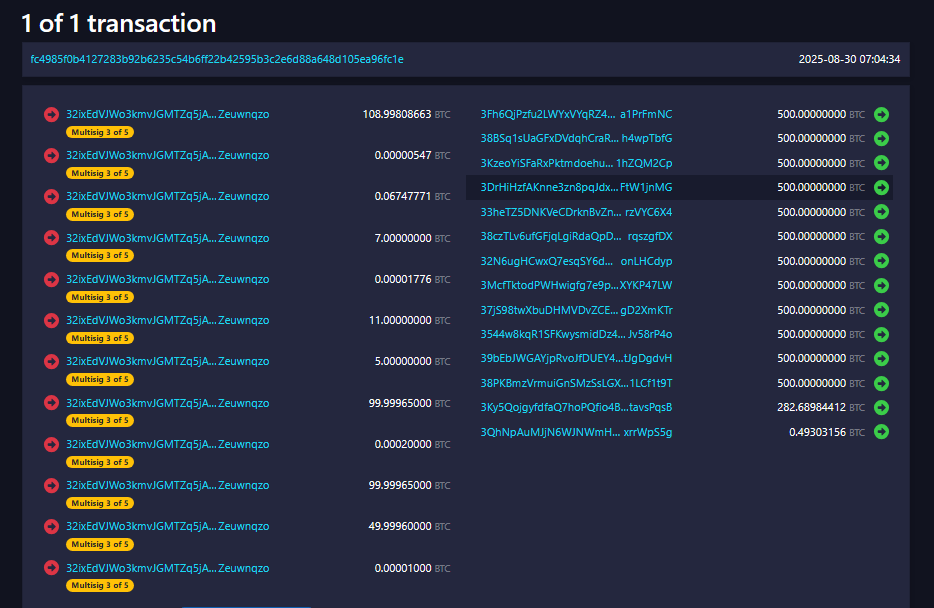
The country transferred 6,274 BTC — roughly $678 million at current prices — out of a single address and into 14 separate addresses, with each new address holding up to 500 BTC.

Split Wallets To Limit Exposure

Based on reports from the Bitcoin Office, the move was meant to reduce the impact of any future quantum breakthrough.

Officials said the shift was a simple, defensive step. Once funds are spent from a Bitcoin address, the address’s public key becomes visible on the blockchain.

That public key, people warn, would be the target if quantum machines ever reached the ability to solve elliptic curve cryptography.

According to Project Eleven, 6 million Bitcoin — worth around $650 billion — could be exposed if such a capability ever arrived.

The math behind the concern is clear: Bitcoin private keys use 256-bit values, and current quantum systems running Shor’s algorithm have not even cracked a three-bit key.

Quantum Risk Is Largely Theoretical

Experts say practical quantum attacks on Bitcoin are not imminent. Project Eleven and other researchers emphasize that the threat remains theoretical for now.

No public quantum computer has demonstrated the power needed to threaten modern cryptography.
Michael Saylor commented in June that warnings about quantum attacks are overblown and that if a real threat appeared, upgrades to Bitcoin software and the hardware ecosystem would be implemented.

The argument follows a simple logic: software and hardware can be changed; cryptography can be upgraded. That does not make the risk zero. It only puts the danger far down the timeline for most observers.

The technical point driving this action is straightforward. When coins leave an address, the blockchain reveals the public key connected to the private key used to sign that transaction.

If a powerful enough quantum computer later appears, that public key could, in theory, be used to derive the private key and drain the address.

By spreading funds across 14 addresses, El Salvador reduces the maximum amount exposed if any single wallet is compromised after spending.

What This Means For Other Holders

Custodians and large holders may take notice of low-cost steps. The move is small in operational cost but large in symbolism.

Other governments, exchanges, and big holders keep watching cryptography advances; splitting large holdings is one straightforward technique they can use without changing how Bitcoin itself works.

Featured image from Unsplash, chart from TradingView


from Bitcoinist.com https://ift.tt/evzxhcS

Comments

Popular posts from this blog

Bitcoin ETFs Post Second Straight Week Of $500 Million Outflow — Details

The US-based spot Bitcoin ETFs (exchange-traded funds) recorded their second consecutive week of significant outflows over the last five-day trading period. This recent run of disappointing performances reflects the ongoing shift in investor sentiment in the United States. Over the past year, strong inflows into the US Bitcoin ETF market have constantly been associated with positive action for the BTC price. Fittingly, the price of Bitcoin has been consolidating over the past few weeks, struggling to pick up any real momentum. Bitcoin ETFs Record Fourth Consecutive Outflow Day According to the latest market data , the US Bitcoin ETFs registered a total daily outflow of $62.77 million on Friday, February 21. This latest round of withdrawals marked the fourth straight day (and the eighth day in the last nine trading days) that the crypto-based products would witness a net capital outflow. The Grayscale Bitcoin Trust (with the ticker GBTC) accounted for a larger percentage of Friday’...

Bitcoin Goes Official: Texas Becomes 1st US State With BTC Reserve

Everything is big in Texas, many would say. Today, the state is looking past its current state of finances by adding Bitcoin to its coffers–and making things bigger in terms of its economic implications. Texas became the first US state to establish a crypto reserve . On March 7, 2025, legislators passed Senate Bill 21, which gives the green light to the state to direct public funds toward Bitcoin and other digital assets. The action has elicited both support and concern, with some viewing it as a prudent financial hedge and others warning of potential pitfalls. A Push For Bitcoin In The Lone Star State For months, Texas has been seeing increasing favor for the idea of a Bitcoin reserve. Senator Charles Schwertner introduced SB 778, a measure that proposes establishing a strategic stockpile. Including the top crypto asset into the state’s financial reserves was meant to help cushion inflation and economic uncertainty. Texas officials, especially Lieutenant Governor Dan Patrick, wh...

Liczba milionerów kryptowalutowych wzrosła o 40%. Rynek przekracza 3,3 biliona dolarów

Rozwój rynku kryptowalut widać również bo liczbie osób, których portfel kryptowalutowy przekroczył milion dolarów. Według najnowszego raportu Henley & Partners, liczba inwestorów posiadających majątek przekraczający milion dolarów w cyfrowych aktywach wzrosła o 40% w ciągu ostatniego roku. Aktualnie na świecie jest już 241 700 milionerów, jeśli chodzi o waluty cyfrowe. Wzrost ten zbiegł się z historycznym momentem, gdyż w połowie 2025 roku kapitalizacja całego rynku kryptowalut przekroczyła 3,3 biliona dolarów . Bitcoin wciąż liderem wzrostów Największy udział w tworzeniu nowych fortun ma niezmiennie Bitcoin. Liczba posiadaczy portfeli BTC, których wartość przekracza milion dolarów, wzrosła aż o 70% rok do roku i wynosi dziś 145 100 . Jeszcze bardziej imponująco wygląda grupa tzw. Centymilionerów, czyli inwestorów posiadających ponad 100 milionów dolarów w Bitcoinie. Ich liczba wzrosła o 63% , osiągając poziom 254 osób. Co więcej, liczba miliarderów BTC podskoczyła do 17, notu...