
Crypto’s Dark Side: $9 Billion In Scam Losses Rock The US In 2024—FBI

Crypto scams hit an all-time high in 2024, with Americans losing a whopping $9.32 billion to digital currency scams, a new FBI report released on Monday showed.

The losses are a 66% increase from last year’s and account for over half of all cybercrime losses across the country. The FBI’s Internet Crime Complaint Center (IC3) reported almost 150,000 crypto-related complaints as part of its yearly review of online criminality.

Older Americans Lose Billions To Digital Currency Fraud

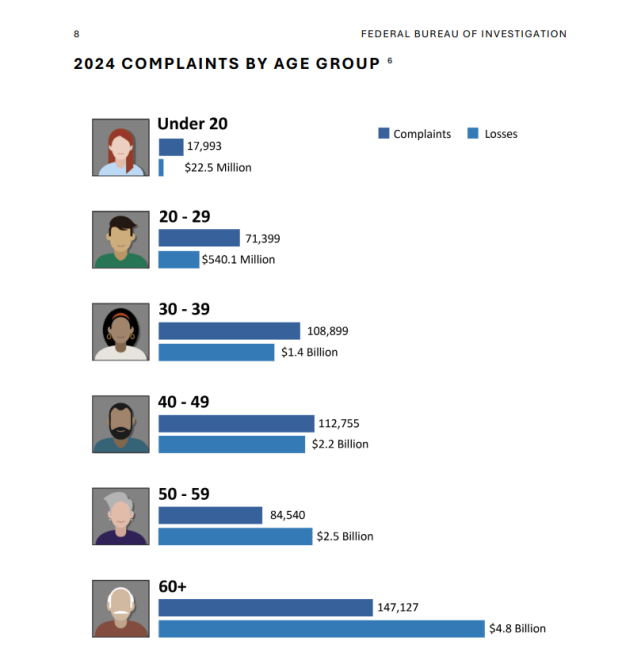
Americans over 60 have become prime targets for cryptocurrency scammers. The FBI report shows that complaints from senior citizens surged 96% in 2024, with 33,36 reports filed compared to 16,96 in 2023. These older victims lost $2.84 billion to crypto fraud schemes, an increase of 71% from the previous year.
Younger age brackets were not left behind either. According to FBI statistics, under-20 victims filed 1,819 reports with losses worth $7.77 million. Americans aged between 20-29 years old reported stolen money worth $370.44 million, while the 30s lost $1 billion. The most affected working-age bracket was 40-49 year olds, who lost $1.46 billion worth of cryptocurrency.
Investment Scams Dominate Crypto Scam Landscape

The report notes how bogus investment schemes are still the most prevalent and expensive crypto scam. As per the FBI, these types of schemes resulted in 41,557 complaints and $5.81 billion in losses, a 47% rise compared to 2023. The victims are normally assured of significant returns on investments in cryptocurrency that never come through.
Other prevalent crypto scam tactics monitored by the FBI include crypto ATM and kiosk scams, which involved almost 11,000 complaints and $246.7 million in losses. Tech support scams in which attackers impersonate IT support garnered $962 million from more than 11,000 victims. Work scams cost Americans $197 million, while romance scams involving cryptocurrency emptied $237 million out of victims searching for love.

Government impersonation scams, in which attackers pose as officials from organizations such as the IRS or Social Security Administration, resulted in $146 million in crypto losses. Ransomware attacks, although fewer at 389 complaints, still resulted in $1.07 million in damages.

FBI Prevention Program Saves Victims $286 Million

The FBI’s “Operation Level Up” program saved millions of dollars in potential losses by warning individuals being targeted by cryptocurrency scammers. The initiative informed 4,323 potential victims of ongoing attempts at fraud targeting them. The report says that 76% of them had no idea they were being defrauded.

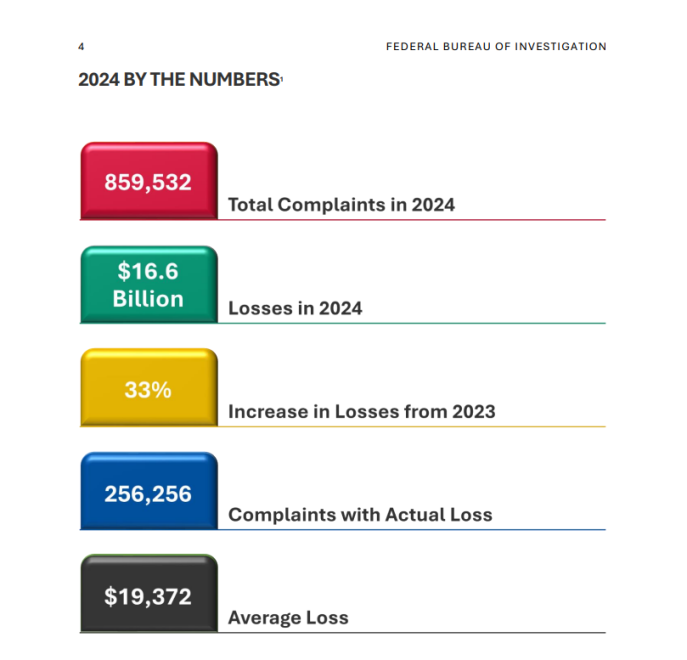
This warning system averted a projected $286 million in losses that would have resulted otherwise. How this program succeeded is in direct contrast to the increasing trend of crypto crime which, in large part, made up the overall $16.6 billion Americans swindled online in 2024 – a 33% boost from the year before.

The FBI’s Internet Crime Complaint Center, marking its 25th anniversary with this report, continues to monitor cryptocurrency fraud as one of the fastest-evolving fields of cybercrime.

Featured image from Issaro Prakalung / EyeEm (Getty Images), chart from TradingView


from Bitcoinist.com https://ift.tt/KkMuqvN

Comments

Popular posts from this blog

Dogecoin Sees 47% Spike In Active Addresses, Why Price Could Follow Suit

Dogecoin has witnessed a massive spike in its active addresses , providing a bullish outlook for the foremost meme coin. Based on this development, the DOGE price could also witness a bullish reversal soon enough as it reclaims key support levels.  Dogecoin Records 47% Spike In Active Addresses In an X post , crypto analyst Ali Martinez stated that Dogecoin’s network activity is picking up. This came as he revealed that active addresses have jumped 47% in the past month, rising from 110,000 to 163,000. This development is bullish as it indicates more users are using the network.  This could help spark a significant rally in the Dogecoin price, as a surge in active addresses indicates that DOGE’s utility is on the rise. Another onchain metric which paints a bullish picture for the meme coin and hints at a reversal is the increase in new addresses. In another X post, Martinez revealed that Dogecoin’s new addresses have doubled in the past month, climbing from 16,400 to 34,6...

Bitcoin ETFs Post Second Straight Week Of $500 Million Outflow — Details

The US-based spot Bitcoin ETFs (exchange-traded funds) recorded their second consecutive week of significant outflows over the last five-day trading period. This recent run of disappointing performances reflects the ongoing shift in investor sentiment in the United States. Over the past year, strong inflows into the US Bitcoin ETF market have constantly been associated with positive action for the BTC price. Fittingly, the price of Bitcoin has been consolidating over the past few weeks, struggling to pick up any real momentum. Bitcoin ETFs Record Fourth Consecutive Outflow Day According to the latest market data , the US Bitcoin ETFs registered a total daily outflow of $62.77 million on Friday, February 21. This latest round of withdrawals marked the fourth straight day (and the eighth day in the last nine trading days) that the crypto-based products would witness a net capital outflow. The Grayscale Bitcoin Trust (with the ticker GBTC) accounted for a larger percentage of Friday’...

Bank of Russia Proposes Limited Crypto Trading for Select Investors

The Bank of Russia has put forward a new proposal that could mark a significant shift in the country’s approach to cryptocurrency regulation. Earlier today, the central bank announced that it has submitted a proposal to the Russian government to discuss allowing a limited group of investors to buy and sell cryptocurrencies such as Bitcoin. The proposal suggests implementing a three-year experimental regime where only qualified investors with at least $1.1 million in securities and deposits would be permitted to engage in crypto trading. This move is part of ongoing efforts to define Russia’s digital currency policies, which have historically shifted between strict regulations and cautious acceptance. Despite considering this controlled legalization for select investors, the Bank of Russia maintains its stance against using cryptocurrency as a payment method. The institution has also recommended introducing penalties for those who violate the terms of the experimental regime, rein...